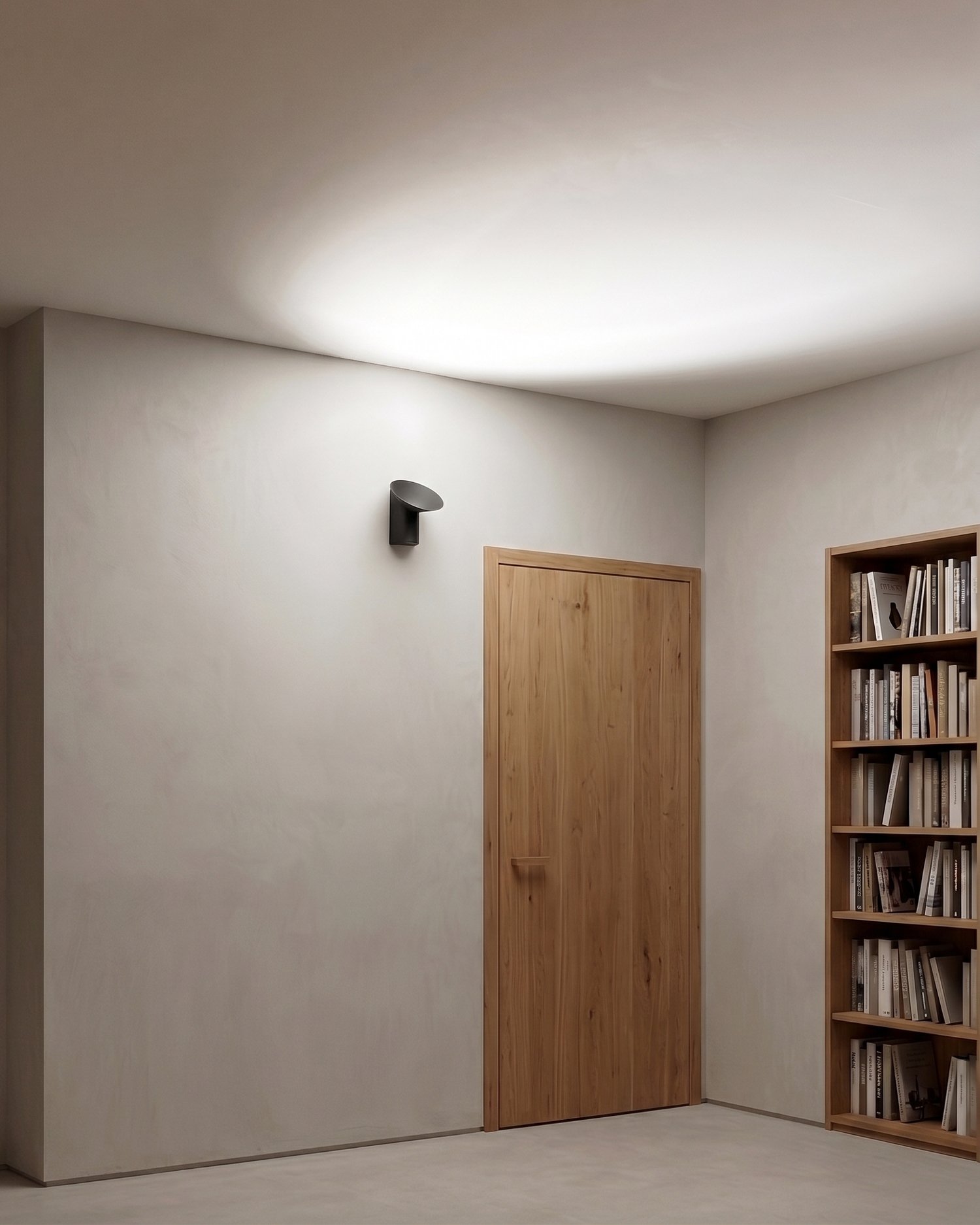
Cone Sconce is proof that a modest amount of light can have a substantial effect on a room. Its upward-angled LED sends light spreading across the ceiling, which reflects illumination back into the space. The ceiling becomes part of the lighting design.
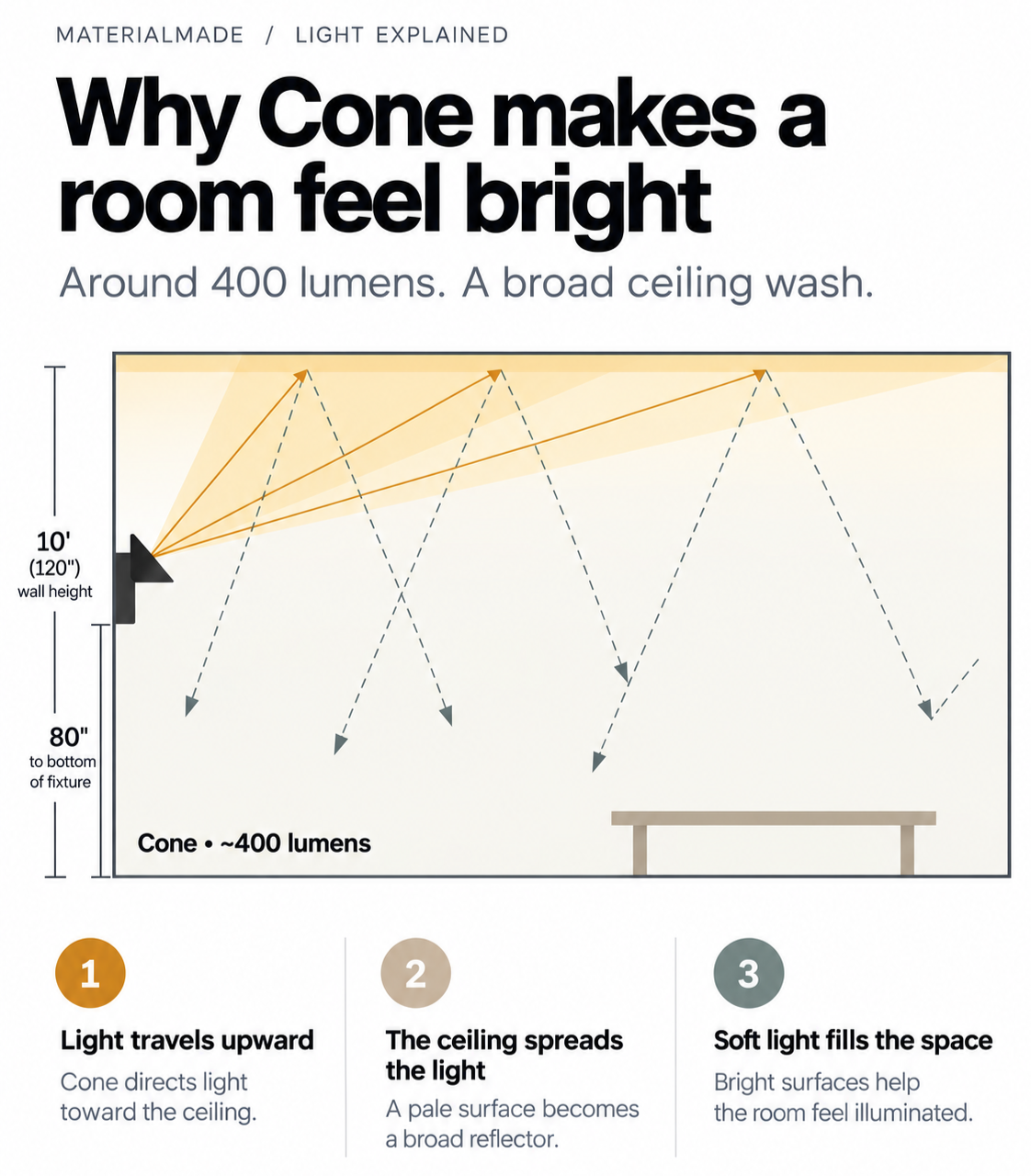
Lumens describe output. Illuminance describes where it lands.
Indirect light reaches a space by first reflecting off another surface. Cone directs light upward, creating a broad ceiling wash. A pale, matte ceiling scatters that light in many directions, effectively becoming a large, soft source of illumination.
Delivered lumens measure the light leaving the complete fixture. Illuminance measures how much light arrives per unit of area on a surface, expressed in lux or foot-candles.
This reflected light reaches walls, furniture, and the floor, helping soften shadows and bring ambient light into the room. Indirect lighting and illuminance are key to Cone sconce's ability to spread so much light.
Why the room feels bright
Our impression of brightness depends partly on the surfaces we see. Luminance describes light leaving a surface in a particular direction, including toward our eyes. A brightly illuminated ceiling occupies a large part of our view, so it can make the whole room feel more illuminated.
That's Cone's effect in a nutshell: output, distribution, and reflection working together, with the ceiling spreading the available light throughout the space.
Picture Cone along a hallway
A series of Cone sconces can create a rhythm along the wall, with overlapping ceiling washes bringing continuity to the passage. The same approach could bring ambient light to an entry or bedroom.
It's a good reminder that a fixture's impact isn't just about how much light it makes, but where that light goes.